Overview
Neuroscience is entering a new era, with Brain-on-a-Chip organoids redefining how we model the human brain. Adoption, however, has been slowed by variability, fragile long-term cultures, and the lack of scalable tools for functional readout.
Each challenge is solvable — and the breakthrough lies in moving beyond fragmented fixes toward a unified, integrated platform that delivers mature, reliable organoids at scale, unlocking a new era of precision drug development.
LithopsBio tackles variability, viability, and validation through three tightly integrated capabilities:
AUTOMATION
Minimize technical variability and unlock scalable workflows
MICROFLUIDICS
Enhance oxygenation, tissue health, and maturation
MONITORING
Track neural activity and culture conditions in real time
These elements work together to remove adoption barriers at scale. One of the key enablers is our high‑density electrophysiology technology, developed through years of NIH‑supported research.
Deep-Tech
NIH support has enabled the development of advanced electrophysiology tools that transform “monitoring” from a concept into a scalable reality. These innovations integrate seamlessly with organoid culture systems, providing high‑density, long‑term recordings of neural activity.
Willow | Ultra-high channel count neurophysiology
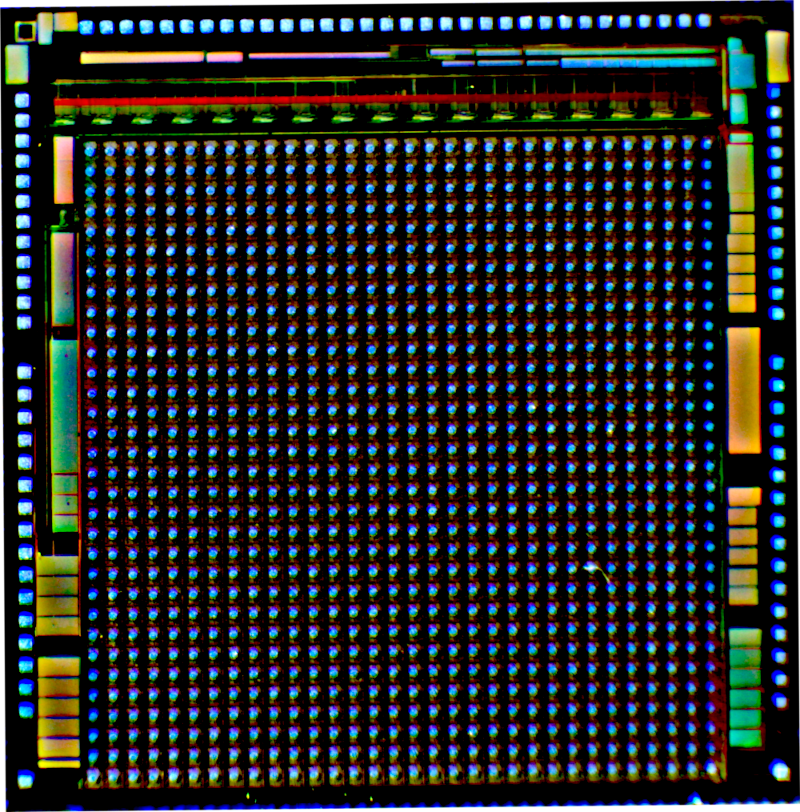
ASIC | Neurosensing IC
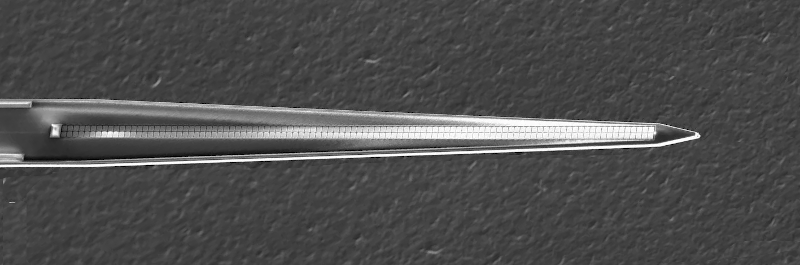
MEMS | Silicon probe
Validation



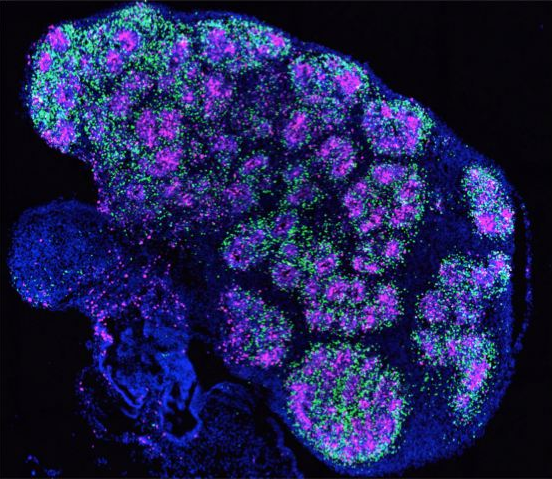
Cell diversity and network dynamics in photosensitive human brain organoids
Publications
- Allen BD., Moore-Kochlacs C., Bernstein JG., Kinney JP., Scholvin J., Seoane LF., Chronopoulos C., Lamantia C., Kodandaramaiah SB., Tegmark M., Boyden ES. “Automated in vivo patch-clamp evaluation of extracellular multielectrode array spike recording capability.” Journal of Neurophysiology , 120 (5) , pp.2182-2200 , 2018.
- Quadrato G., Nguyen T., Macosko EZ., Sherwood JL., Yang SM., Berger DR., Maria N., Scholvin J., Goldman M., Kinney JP., Boyden ES., Lichtman JW., Williams ZM., McCarroll SA., Arlotta P. “Cell diversity and network dynamics in photosensitive human brain organoids.” Nature , 545 (7652) , pp.48-53 , 2017.
- Scholvin J., Kinney JP., Bernstein JG., Moore-Kochlacs C., Kopell N., Fonstad CG., Boyden ES. “Close-Packed Silicon Microelectrodes for Scalable Spatially Oversampled Neural Recording.” IEEE Transactions on Biomedical Engineering , 63 (1) , pp.120-130 , 2016.
- Carpenter M. “Glut of data from mice brains tests MIT's computing power.” The Boston Globe , 2016.
- Kinney JP., Bernstein JG., Meyer AJ., Barber JB., Bolivar M., Newbold B., Scholvin J., Moore-Kochlacs C., Wentz CT., Kopell NJ., Boyden ES. “A direct-to-drive neural data acquisition system.” Frontiers in Neural Circuits , 9 , pp.46 , 2015.