LithopsBio is on a mission to bring patient‑relevant biology to the center of drug discovery.
We turn bench‑level organoid data into bedside‑relevant understanding, enabling precise therapeutics built on real human biology.
Why Drug Discovery Needs Human‑Relevant Biology
Drug discovery still relies heavily on models that fail to capture the complexity of human biology. This gap slows development, obscures safety signals, and leads to costly failures in the clinic. We believe the next generation of therapeutics will be built on platforms that reflect real patient diversity and functional biology from the start.
LithopsBio is developing scalable, cloud‑accessible organoid and electrophysiology technologies that make this possible. Our goal is to give scientists and drug developers access to human‑relevant data early enough to change outcomes — not just interpret them.
The Team Advancing Human‑Relevant Drug Discovery
Leadership

John Sherwood, PhD
Co-Founder & CEO
Neuroscientist and entrepreneur pioneering neurotechnology and organoid electrophysiology to advance research and drug discovery.
Dr. John Sherwood, Director of Neuroscience at LeafLabs, brings 20+ years of expertise as an electrophysiologist across academia, NIH, Eli Lilly, Harvard, and the Broad Institute. He pioneered recordings in human cerebral organoids, providing the first evidence of organized network activity. As PI on NIH and DARPA awards, he advanced neurosensing IC chips, silicon probes, and automated spike‑sorting pipelines. At LeafLabs, he is advancing the commercialization of neurotechnology tools, applying deep technical expertise and entrepreneurial training to position them for impact in drug discovery and therapeutic innovation.
He received a B.Sc. and Ph.D. in Neuroscience from the University of Bristol, UK, and completed postdoctoral training at NIH, Eli Lilly, and Harvard University / Broad Institute.

Giorgia Quadrato, PhD
Co‑Founder & CSO
Pioneering reproducible brain organoid systems with single‑cell omics to decode brain biology and advance transformative therapies.
Dr. Giorgia Quadrato, Associate Professor of Stem Cell Biology and Regenerative Medicine at USC, leads a lab integrating brain organoids and single‑cell omics to uncover the cellular and molecular basis of brain development and disease. She pioneered protocols to mature organoids and earned early career honors including the 2023 Broad Innovation Award. As Co‑Director of USC’s CIRM ASCEND Shared Resource Laboratory, she advances and democratizes access to organoids and cutting‑edge technologies across California. She also serves on the Scientific Advisory Board of the Syngap Research Fund.
She earned a B.S. in Molecular Biotechnology and M.S. in Pharmacogenomics from the University of Milano Bicocca, a Ph.D. in Neurobiology and Stem Cell Biology from the University of Piemonte Orientale, and completed postdoctoral training at the University of Tüebingen and Harvard University/Broad Institute.
Advisors
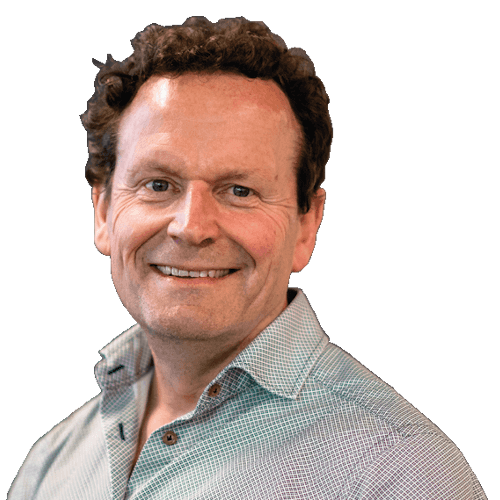
John Isaac, PhD
Scientific Advisor
Internationally recognized neuroscientist shaping innovation in neurodegeneration and psychiatry across academia, pharma, and biotech.
Dr. John Isaac, Chief Scientific Officer at Slingshot, is an internationally recognized neuroscientist with over 30 years of experience spanning academia, non‑profit, and industry. He most recently served as CSO of AviadoBio, leading scientific strategy and pipeline development. Previously, he was Senior Director of Neuroscience External Innovation at Johnson & Johnson Innovation, where he identified and advanced external opportunities in neurodegenerative diseases and mood disorders. He also held senior roles at the Wellcome Trust and Eli Lilly.
He received a bachelor’s degree in biochemistry and pharmacology and a PhD in neuroscience from the University of Southampton, UK, and has held academic faculty positions in the UK and USA.

Andrew Meyer
Deeptech Advisor
Experienced deep‑tech founder and board member, CEO of LeafLabs and Pickle Robot, guiding robotics and Physical AI companies toward scalable impact.
AJ Meyer is a serial entrepreneur and MIT engineer with board‑level expertise in scaling robotics and Physical AI companies. He founded and leads LeafLabs, Pickle Robot Company, and Industry Labs. LeafLabs is an R&D firm advancing deep‑tech hardware/software systems, including brain‑implantable devices and prototypes for Google and Facebook. Pickle Robot pioneers Physical AI, combining foundation models, vision, and robotics to automate work at human scale. Industry Labs provides co‑working hubs for Boston’s tech community. Meyer maintains strong ties to MIT’s engineering and AI research community, where his career began.
B.S. in Electrical Engineering & Computer Science from MIT, where he researched robotics at the Computer Science and Artificial Intelligence Laboratory and interned at Honda Research Institute and Analog Devices.
Mission
Founded to transform treatments and improve lives, LithopsBio harnesses diversity, patient‑relevant models, and AI to pioneer personalized medicine.
— starting with brain disorders.
Understanding LithopsBio: Origins, Principles, and Timing
Origins & Scientific Lineage
-
How did LithopsBio originate, and what is the relationship to LeafLabs?
LithopsBio grew out of years of research and engineering at LeafLabs, where early work in high‑channel‑count electrophysiology was conducted. LeafLabs is not a parent company, but part of our scientific and engineering lineage. The experience and insights from that work directly inform the platform we are building today.
-
How was the development of LithopsBio’s foundational technology funded?
The foundational engineering work behind LithopsBio’s platform was supported by NIH funding awarded to LeafLabs, LLC over the last decade. LithopsBio Founder John Sherwood, who served as Director of Neuroscience at LeafLabs, was the contact PI on many of these awards. We highlight this because it clarifies provenance and connects our work to peer‑reviewed, federally supported research.
-
How did the Founders meet?
Quadrato and Sherwood met in 2014 while working together in the lab of Prof. Paola Arlotta at Harvard. During this time, Quadrato first‑authored a seminal paper describing mature cerebral brain organoids and, collaborating with Sherwood, demonstrated the first evidence of organized brain‑cell activity in this nascent model. These electrophysiological studies utilized early generations of high‑channel‑count electrophysiology tools developed by LeafLabs and the Boyden Lab (MIT). In 2018 Sherwood left to lead technology development at LeafLabs, and Quadrato established a lab at USC to drive brain organoid innovation.
Why Now
-
What makes this the right time to build a platform like LithopsBio?
A rare technological convergence has created the conditions for LithopsBio. Brain organoid models have reached new levels of maturity, viability, and reproducibility. Advances in automation, robotics, and physical AI now enable experimentation at scales that were previously impossible. And modern ML/AI systems can finally extract insight from high‑dimensional functional data and drive decisions that change outcomes. Together, these shifts represent a true inflection point, one where human‑relevant discovery becomes not just feasible, but inevitable.
-
Why did earlier attempts at brain‑organoid drug discovery struggle to gain traction?
Early efforts emerged before the field had the biological maturity, supporting technologies, and computational infrastructure required to make organoid‑based discovery viable. Lab‑grown mini‑organs were highly variable and difficult to mature; functional data couldn’t be captured longitudinally at scale, and the analytical methods needed to interpret those signals had not yet been developed. Recognizing these gaps, we chose to wait and spent the last seven years building the biology, hardware, and data systems the field was missing.
-
What biological barriers have slowed the adoption of brain organoid models?
Early brain organoids lacked the maturity, stability, and reproducibility required for drug discovery. Tissue variability, short culture lifetimes, and inconsistent functional phenotypes made it difficult to generate reliable, comparable data. Recent advances in maturation protocols, long‑term viability, and functional consistency have made organoids ready for real‑world applications.
Identity & Principles
-
What principles guide how LithopsBio is being built?
LithopsBio is grounded in the principles essential to advancing personalized medicine: human‑first thinking, diversity, and structured data. These aren’t just scientific requirements — they’re company‑wide operating systems that shape how we design experiments, build deep technology, understand customers, and make decisions that change outcomes. Embedding these principles from day one ensures they guide our growth across science, engineering, product, and go‑to‑market.
-
Why is diversity essential to LithopsBio’s mission?
There is strength in diversity. Human biology is diverse, and personalized medicine depends on capturing that diversity. The same rule applies to our platform, which requires a diverse set of expertise to build — from engineers and neuroscientists to ML/AI researchers, data scientists, and customer‑facing teams. These different priors make the platform more generalizable, more robust, and more human‑relevant.
-
Why is structured data so important to LithopsBio’s success?
Structured data is our force multiplier. Every experiment, workflow, and customer interaction becomes part of a unified data lake that compounds insight over time. This foundation makes the platform smarter, safer, and more predictive with every run. It’s how we scale human‑relevant biology, accelerate discovery, and deliver on our mission.